
Community inclusion
Support accessing local activities, building social connections, and participating in community life with confidence.
Person-centered services for people with intellectual and developmental disabilities, built around choice, community participation, skill development, and lasting relationships.
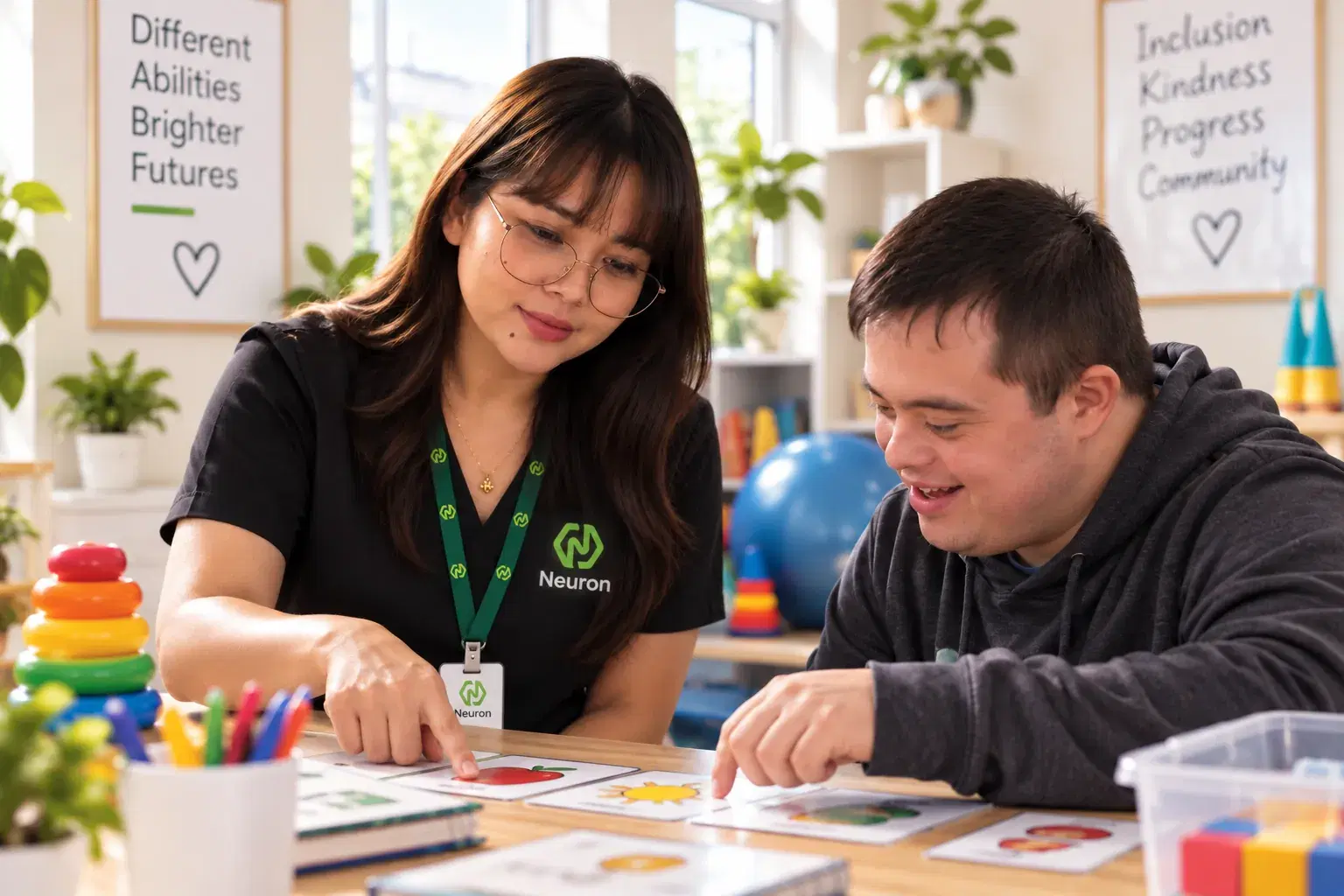
Our care promise
The individual leads; the support team helps turn preferences and goals into practical next steps.
What care can include
Every plan is individualized after assessment. These are common ways our team can help.
Support accessing local activities, building social connections, and participating in community life with confidence.
One-to-one help with routines, communication, decision-making, safety, and personal goals at home and in the community.
Structured practice for daily living, travel, self-advocacy, employment readiness, and greater independence.
Consistent communication and planning that respects family knowledge while centering the individual’s own voice.
Who this may help
What families can expect
Coverage and access
Neuron accepts eligible New Jersey DDD self-directed budgets and private pay. Our intake team can review current Supports Program and Community Care Program options.
Self-direction lets an adult enrolled in a DDD Medicaid waiver program choose and manage their own support workers within an annual budget. A fiscal intermediary handles payroll, taxes and paperwork.
To be eligible for DDD, a person must be 21 or older (the application can be submitted from age 18), have a lifelong disability that began before age 22 and substantially limits three of seven life areas, be a U.S. citizen and New Jersey resident, and be eligible for or enrolled in Medicaid.
The NJ Comprehensive Assessment Tool (NJCAT) measures support needs in self-care, behavior and medical areas. The score sets a tier, and the tier determines the annual budget.
A support coordinator, who works independently of service providers, builds your yearly service plan and meets with you at least monthly. Ask them first whether self-direction fits.
DDD names two self-directed employee models. In Vendor Fiscal/Employer Agent, you or someone you choose is the employer of record; Acumen is the fiscal intermediary, and DDD pays its fee. In Agency with Choice, Easterseals NJ is the employer of record and you are the managing employer; the fee comes out of your budget, and workers who log 30 or more hours a week can get employer health insurance. You can use only one model at a time.
Both models sit inside DDD's two waiver programs. The Supports Program has no waiting list. The Community Care Program has extra criteria and a waiting list to be evaluated.
If you are weighing how your budget could be used with Neuron, ask us: call (856) 389-5089.
Sources
Who provides it: Trained direct support professionals and program staff, working with the individual, their family and their DDD support coordinator.
Step 1
We learn about the person, their interests and goals, the supports already in place and how services are funded, including DDD budgets.
Step 2
We meet the individual (and family, if they wish) to understand routines, communication and what a good day looks like.
Step 3
We align our services with the Individualized Service Plan (ISP) and the approved budget.
Step 4
Staff start at home and in the community, document progress, and adjust support as goals grow.
People with intellectual and developmental disabilities, such as autism, Down syndrome or cerebral palsy, who want support with daily living, community life and personal goals.
Neuron accepts eligible New Jersey DDD self-directed budgets, as well as private pay. Our intake team can walk you through Supports Program and Community Care Program options.
Yes. Support is person-centered: the individual leads, and their support team helps turn their preferences into practical steps, working with family and the support coordinator.
Burlington County, Camden County, Gloucester County, Mercer County, and Atlantic County, New Jersey.
Reviewed by Dr. Jesus Bey (Founder and Chief Executive Officer) and Summer Ordonez (Neuron Health Systems), October 2026.
Tell us about the person, their goals, and the support already in place. We will help identify a practical path forward.